
Antique Furniture Reupholstery: How To Preserve & Update
The decision to reupholster treasured heirlooms can feel weighty; pieces like a grandmother's wingback chair or a beloved Chesterfield or chaise are irreplaceable. The carved legs, the perfectly proportioned silhouette, and the history can have deep meaning for many owners.
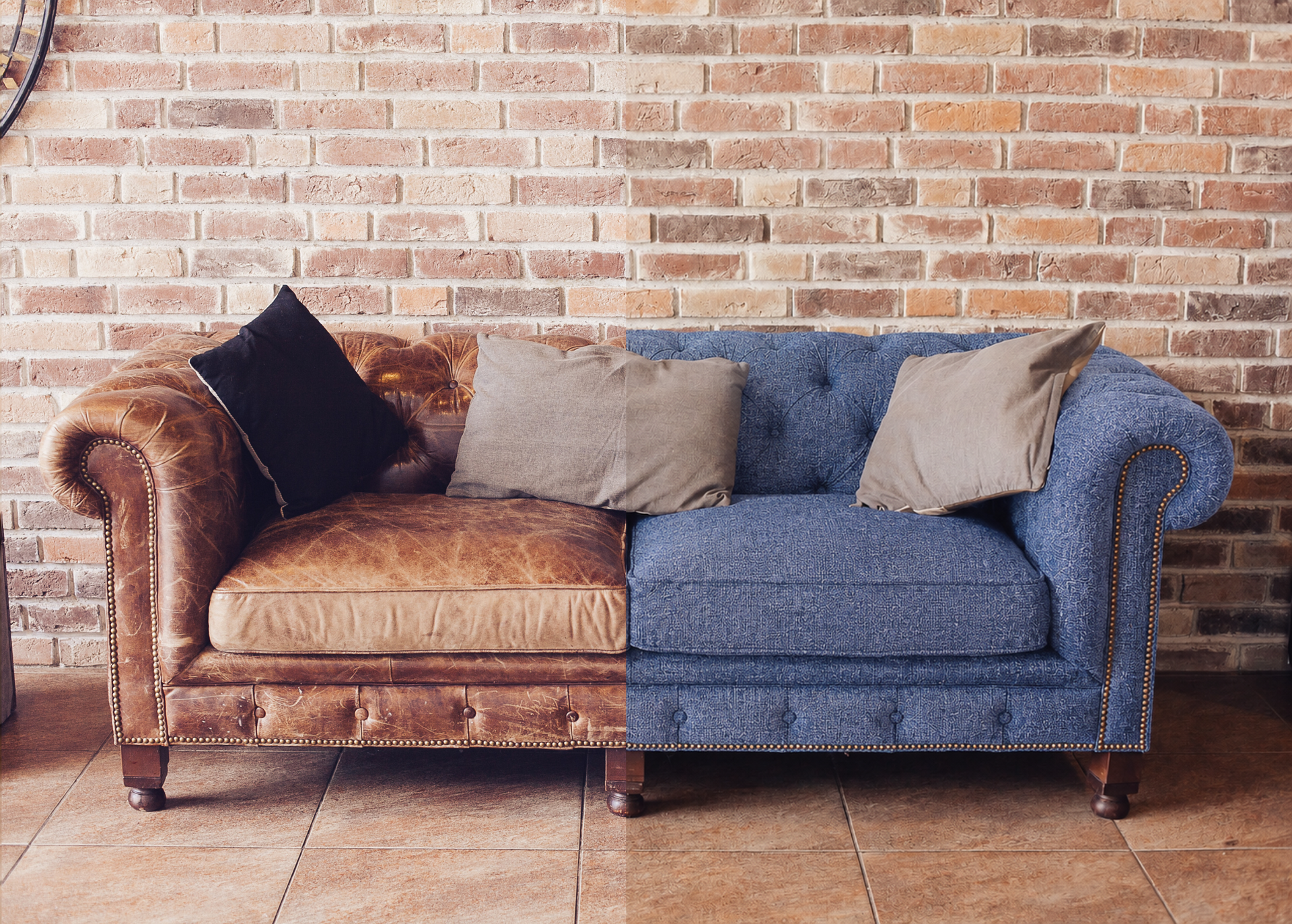
But these objects simply weren’t built to last forever: fabric fades, cushions flatten, and what was once a showpiece can start to look worn out. Or maybe the outdated floral print simply doesn’t fit into your modern Baltimore-area home.
That's where antique furniture reupholstery comes in. With help from Alexander Blank Fabrics & Design, you can honor what makes a piece special while giving it new life.
Start with the Frame: Antique Furniture Reupholstery Begins Here
The most common mistake people make for this project is falling in love with a fabric before evaluating the piece structurally. A beautiful textile draped over a compromised frame is money wasted, so we always assess the bones first to see if your piece is a good candidate for reupholstery.
Flip the piece over and inspect the joinery. Antique furniture was typically built with mortise-and-tenon or dowel construction—far more durable than modern staple-and-glue methods.
Minor wobbles can often be re-glued with adhesives that after often traditional or reversible upgrades to what original craftsmen used. More significant cracks, missing corner blocks, or broken legs require professional woodworking attention before the upholstery work begins.
We check the springs, too. Older pieces might have hand-tied coil springs, a construction method still considered the gold standard for seat support. If those springs are intact, they're worth preserving. Sinuous springs or a flat platform base (common in later restorations) will need a completely different approach.
Choose a Fabric That Honors the Design of Your Antique Furniture
Once the frame is sound, the new material is where the piece really comes back into its own. Performance fabrics are surprisingly durable, and many are woven to mimic the texture and drape of period-appropriate textiles while holding up to everyday use
A few examples:
- Victorian-era pieces respond well to chenille, velvet, and damask patterns.
- A tufted Chesterfield reupholstered in mohair velvet looks as though it never left its original drawing room.
- Linen-cotton blends, boucle, or a refined houndstooth suit pieces from the 1940s and 1950s, like tub chairs, slipper chairs, and settees.
- Mid-century modern chairs and sofas favor flat wovens and low-pile fabrics because their clean lines and tapered legs are part of the design; heavier textures compete with the silhouette.
At Alexander Blank Fabrics & Design, you don’t have to compromise on design. We maintain an extensive fabric library for clients working with heirloom and vintage pieces. Seeing samples next to the actual piece, in your own home's light, takes the guesswork out of these decisions.
Reupholster an Antique Sofa the Right Way
Professional antique furniture reupholstery isn't only about frame reconstruction or pulling off old fabric and stapling on new. The details that made the piece so distinctive must be carefully preserved or restored.
Tufting is among the most exacting of these details: Button tufting on a Victorian loveseat requires precise grid calculations, with each button set at equal depth and tension. Even a slight inconsistency creates awkwardness that no beautiful fabric can fix. But a skilled upholsterer will map the original tufting pattern, preserving the spacing as a template for the rebuild.
Welt and piping define edges and transitions between panels. A single welt reads as refined and period-appropriate on most antique styles, while a contrast welt, where the piping is cut from a different fabric, was a hallmark of mid-century design. It's a small detail but replicating it correctly signals real craftsmanship.
Foam density is another consideration for antique furniture reupholstery. High-density, wrapped foam restores antique seating to its original firmness; softer fills common in mass-market furniture tend to bottom out more quickly and throw off proportions. A good upholsterer reads the frame and matches the feel to what it was originally built to support.
Reupholster or Replace?
Here’s what we tell our customers: Choosing between reupholstering and replacing comes down to a balance between structural bones and financial practicality.
Reupholstery is almost always the best choice if the piece has high-quality construction, such as a solid hardwood frame, or if it carries significant sentimental value. Fully restoring a well-made vintage piece often costs less than buying a brand-new alternative of comparable quality.
A replacement makes more sense if the piece is low-quality or structurally compromised. If the frame is warped, cracked, severely damaged, or made of particleboard, the piece might not justify the cost of restoration.
Ultimately, if the piece lacks sentimental value, an elite pedigree, or good bones, the labor and material costs will exceed the value—and we can help with purchasing a new custom piece.
Our Antique Furniture Reupholstery Services: From Worn to Worth Keeping
Alexander Blank Fabrics & Design offers custom furniture services like reupholstry, paired with an extensive fabric library and highly skilled team members.
Let’s refresh your vintage and heirloom pieces and make them usable again. Visit our showroom or contact us for a consultation in Lutherville-Timonium and the greater Baltimore Metro area.