
How to Pair Patterned Fabrics with Different Types of Roman Shades
At Alexander Blank Fabrics & Design, our window treatment experts don’t expect every client who stops by to understand the secrets to interior design. It’s a learning process, and we never tire of explaining how designs work—and we love showing our clients the stunning results.
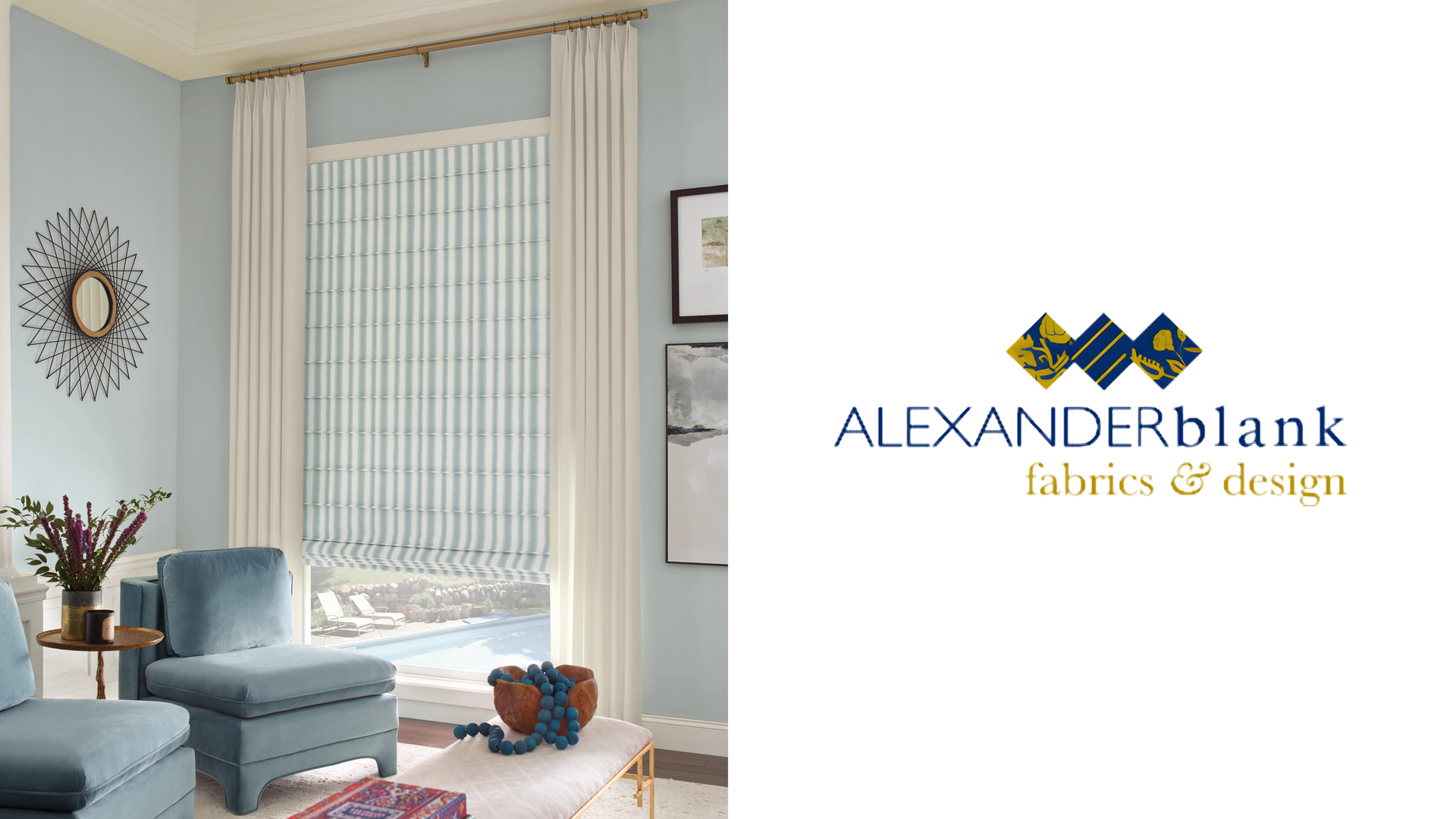
When it comes to understanding pattern or every type of Roman shade, with our help, your new Roman shades can be the most exciting element in your favorite room. Let’s walk through the design process to help you find the perfect fit for your design.
The Best Roman Shade Style Starts With Fold Selection
For a layered window treatment design, especially if you are adding shades to an existing space or redesigning from the floors up, it’s common for homeowners to want to pick a fabric first, then figure out the shade style later. But that's the wrong order of things. A fabric's size, directional movement, and how it behaves when folded mean not all materials will work with every fold. For example, a shade that stacks repeatedly in the same place can slice through a large floral or distort a stripe.
These are the main categories of Roman shade fold styles:
- Flat Roman Shades: A flat Roman shade is the minimalist option. When you fully lower this style of shade, it lies completely flat against the window with no visible folds or seams (unless it has "battens" or rods sewn in to help it fold straight).
- Hobbled Roman Shades (Also called "Waterfall" or "Looped"): Roman shade styles in this category have extra fabric sewn in, so that even when fully lowered, they retain their soft, cascading loops.
- Soft Roman Shades (Also called "Relaxed" or "European"): This soft shade does not have a rigid bottom bar; instead, it has a gentle curve at the bottom.
Next, our consultants explain why certain patterns work in these categories.
The Best Roman Shade Styles for Patterned Fabrics
Flat Roman Shades: Prioritizing Pattern Precision
Flat shades are like a canvas and are a fine choice for detailed fabric designs; you can go big with large-scale florals or bold geometrics that need a flat surface to be fully appreciated. The main thing to watch for is the "stack" when raising the shade. Because the fabric folds onto itself, vertical patterns will compress into dense horizontal bands. Just make sure that you can still see the most striking part of your print when the shade is partially open.
Full Roman Shades: Movement and Texture
Since full shades have those lovely cascading loops, they bring a lot of elegant personality to a room. This style works beautifully with solids, textures, or small, "all-over" patterns that won't look distorted by the constant fabric overlapping. We suggest organic speckles or tiny damasks; it’s best to steer clear of rigid stripes or large, structured prints here. The permanent loops will naturally break up any straight lines, which may make those patterns look disjointed or cluttered.
Soft Roman Shades: Fluidity and Organic Prints
The relaxed, curving bottom "smile" of a soft Roman shade creates a casual aesthetic. This style pairs with fabrics that have a natural drape and textures or patterns that thrive on movement, like wovens, watercolors, or soft botanicals. Because the center of the shade hangs lower than the sides, horizontal stripes are risky and will end up looking like they’re sagging along the bottom curve. Look for prints or textures that feel organic and fluid and let the material's natural sweep play up the design.
Can I Start in Your Window Treatment Showroom and Finish at Home?
Yes, we encourage you to browse our showroom or contact us for a shop-from-home experience. Starting in the showroom lets you check out the weight and texture of fabrics firsthand, but the final decision belongs in your home and with your home’s unique lighting conditions. You can browse our gallery, narrow down your favorite styles and materials, and let us bring samples to your home. That way, your custom selections will look exactly as you envisioned before placing an order.
We Have Different Types of Roman Shades From Hunter Douglas
Alexander Blank Fabrics & Design partners with Hunter Douglas and helps clients match shade style with confidence. We’re proud of our excellent service and look forward to guiding you through your next project.
Visit our showroom or contact us for a consultation in Lutherville-Timonium and the greater Baltimore Metro area.